
Reverse-Engineering Taylor Sheridan’s Storytelling [essay]
These four elements make his work so popular - and so disliked at the same time

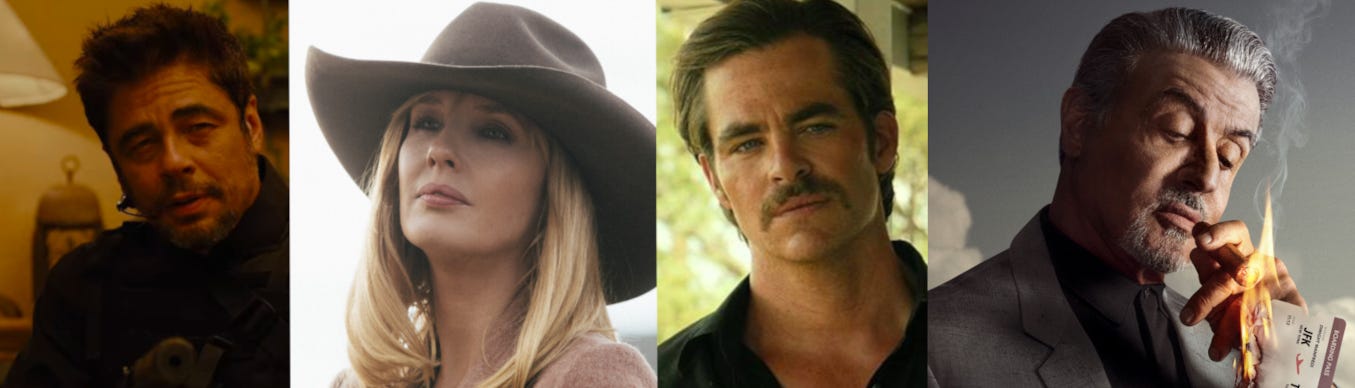
Every time you see a YouTube video with over 100,000 views where a younger millennial or an older Zoomer with a perfectly groomed mustache talks about how much somebody or something sucks, you can safely deduce that the target has probably made millions of dollars and created valuable intellectual property loved by millions. In Taylor Sheridan’s case, this principle definitely holds true. It is easy to find people criticizing him, yet his artistic output is undeniably impressive. He has amassed a cult following and earned widespread critical acclaim.
So what makes his storytelling style (as a screenwriter and as a filmmaker) so memorable and so popular? And why does it have so many haters?
The answer is that he seems to base his work on four principles. Each of them contributes to the overall feel - one that some people adore and others despise.
Spoiler Warning: this essay contains major spoilers for Yellowstone, Sicario, Hell or High Water, Tulsa King, The Sopranos, and Breaking Bad. It discusses key plot points, character arcs, pivotal scenes, and the endings of several storylines in order to analyze Taylor Sheridan’s storytelling techniques. If you have not yet watched these works and wish to experience them unspoiled, do that first. It’s better than reading an essay.
A Realistic Premise.
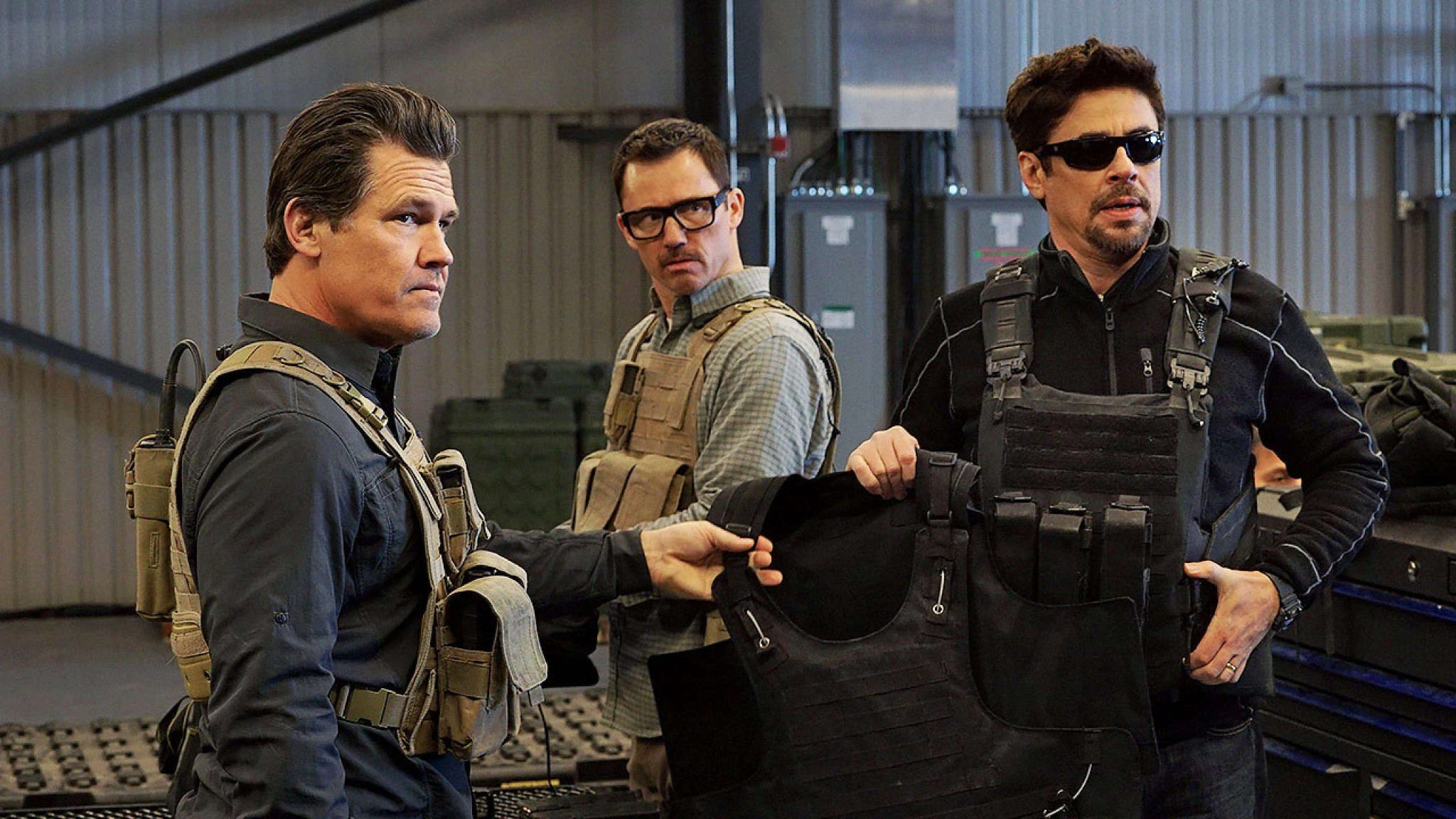
Taylor Sheridan always starts with a premise that has a tangible connection to reality. In Yellowstone, we follow the politics of rural Montana. In Sicario, we follow law enforcement conducting operations in the war on drugs. In Hell or High Water, we see the struggles of a poor Texas family against unscrupulous bankers. In Tulsa King, we see, well, Tulsa, Oklahoma, and the formation of a new criminal organization.
Now then, there is something to be said about realistic premises.
Compare these two sentences:
“In this book, a serial killer has murdered more than eleven people in NYC.”
Okay, that’s one premise. Now let’s change it up a little:
“In 1963, the New York Police finally caught a serial killer who was rumored to have murdered more than eleven people.”
It’s not just the specificity that grabs us. It’s the fact that it really happened - or at least the framing now suggests it. Supposedly, it had taken place on this Earth. Taylor Sheridan doesn’t do sci-fi or fantasy. He picks premises that already exist. Most of his audience doesn’t live in Oklahoma or Montana or have anything to do with the war on drugs, but we’re all familiar with these places and concepts. We know they are real. That immediately raises the stakes because of the familiarity and the sense of immediacy.
Dramatic density.
When you watch his movies or TV shows, there are always a lot of moving parts, a lot of things happening - whatever is associated with the setting is going to be presented in one way or another; it is all brought to the surface.
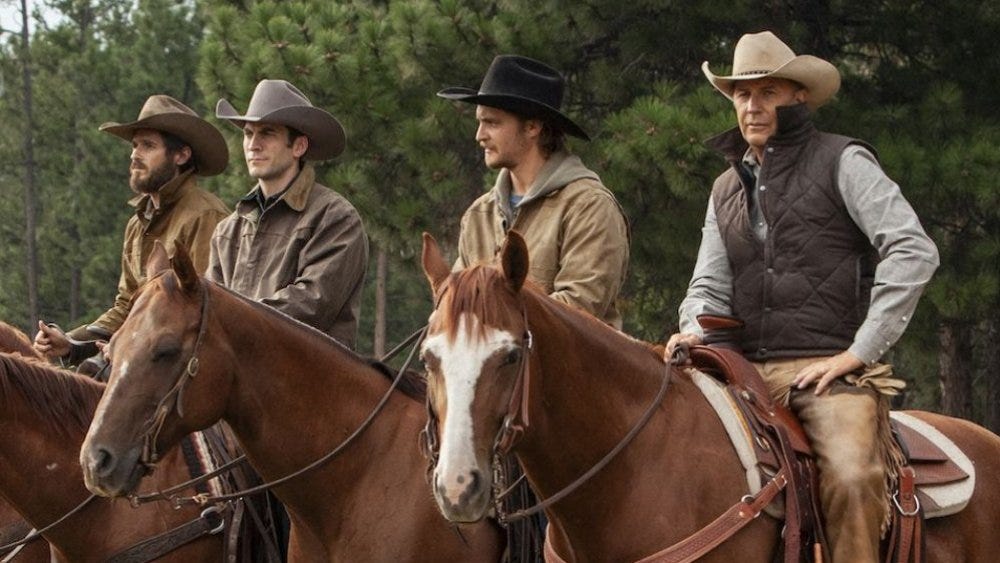
Take Sicario, for example. We witness a series of atrocities committed by the cartels. Whether a single law enforcement officer would realistically witness that much violence over the course of a few weeks is debatable, but every element Taylor Sheridan shows is, again, rooted in real events within a realistic setting.
For example, are there cases of public executions carried out by the cartels in real life? Yes. Are there examples of corrupt government officials or police officers working with the cartels? Yes. Are there examples of military-style attacks on convoys? Yes.
Would all of that happen within a single story? That’s a different question.
But this is the dramatic density that Taylor Sheridan uses to raise the stakes. He packs his stories with realistic elements, even if their concentration is unusually high.
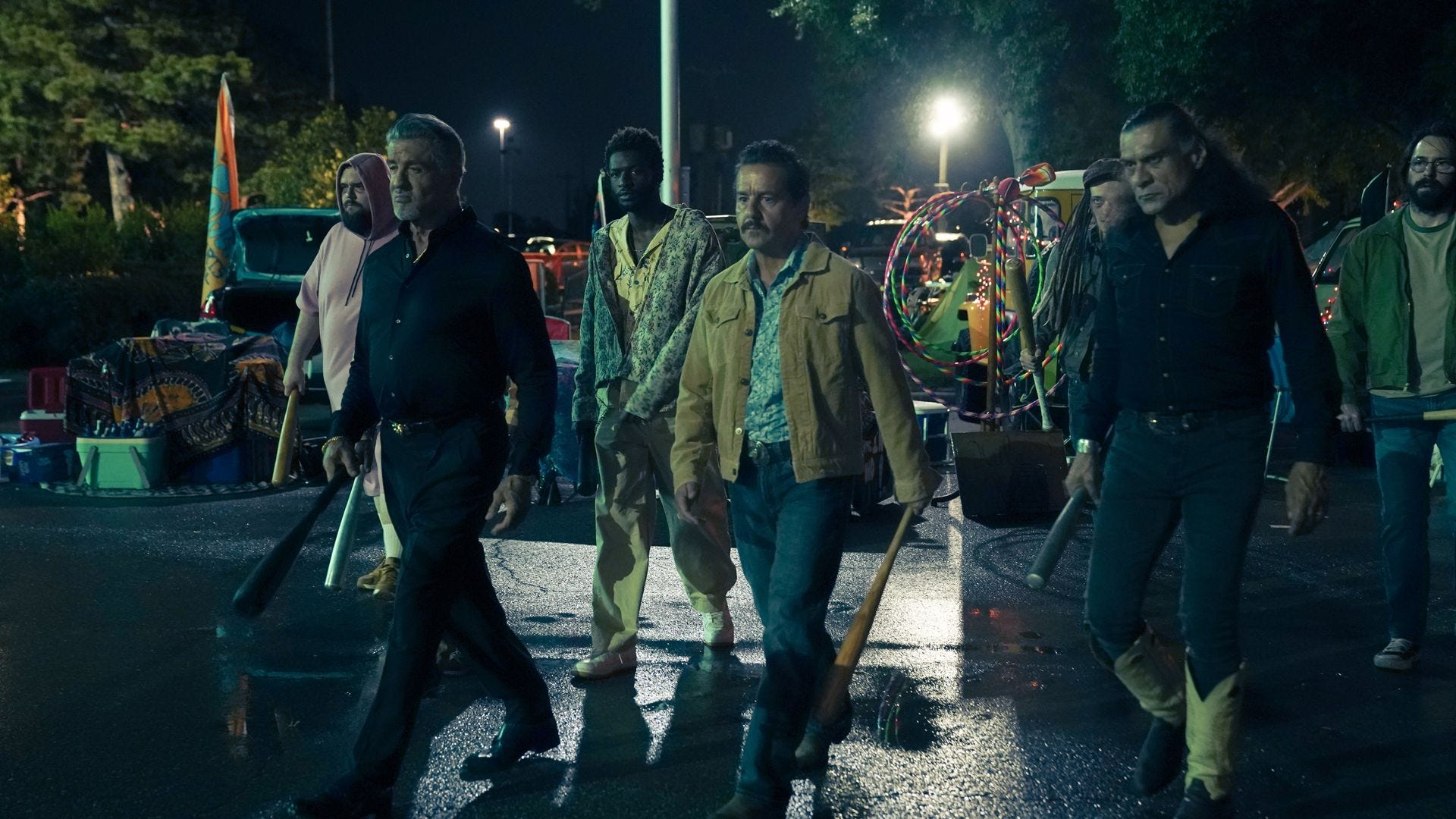
In Tulsa King, we see Dwight Manfredi interacting with local marijuana businessmen, an ATF agent, Native Americans, and various criminal groups over just the first couple of episodes. Taylor Sheridan is not interested in making TV shows where nothing happens, where there is no resolution, or where there is only one mystery or a single hook. He fills his films and television series with events, organizations, conflicts, and storylines that all tie back to a recognizable, realistic world.
Setting sparsity
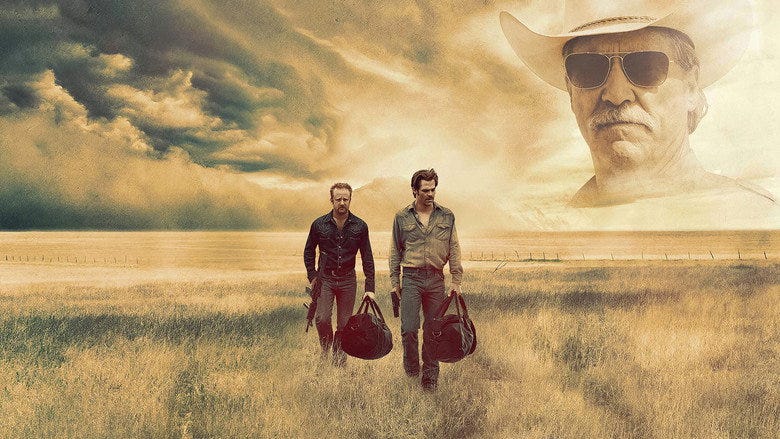
The third element of Taylor Sheridan’s formula is, in many ways, the semantic opposite of the previous one. Taylor Sheridan deliberately picks locations where man stands tall amidst nature, giving his stories a distinct neo-Western atmosphere. In that regard, he speaks directly to the foundations of American culture. The myth of the Wild West finds a modern reinterpretation in his work.
We have horses, ATVs, and helicopters crossing vast plains. We have Montana, Texas, Oklahoma, and the southern border of the United States.
A setting like New York City would immediately diminish this feeling. In a large city, there are millions of people, but nobody knows their neighbors, and every step is watched by cameras. When two characters meet, there is no sense of two distinct forces colliding.
Now imagine those same two characters meeting in the middle of a desert. It feels like two mountains crashing into one another.
This sparsity allows for much more violent and explosive storytelling. A firefight in downtown New York would dominate the news. There would be immediate public attention, investigations, and political consequences. A firefight in the middle of a desert or on an isolated plain, however, is something that can be quietly swept under the rug.
That is what makes the previous point - dramatic density - possible.
Let’s say you have a kidnapping. In a major city, that kidnapping might become the entire story, followed by a five-episode investigation centered on police work and public reaction. In Taylor Sheridan’s world, however, the kidnapping is only one element among many. It immediately leads to retaliation, vigilante action, cartel involvement, political consequences, or another conflict, allowing the story to move rapidly from one dramatic event to the next.
This is an interesting paradox. By keeping the setting sparse, Taylor Sheridan is able to keep the story exceptionally dense.
Larger-than-life characters
And now we come to the fourth element - the one that probably attracts the most criticism, especially from those YouTubers with the half-grown mustaches. It is
When people criticize Yellowstone, they often say that real cowboys don’t behave like that, that this is not what cowboy life looks like. And they are right, to an extent. What Taylor Sheridan shows is a semi-criminal operation, something that is certainly not representative of the average cowboy’s experience.
Now let’s look at Tulsa King. Dwight Manfredi walks into a marijuana dispensary - completely legal in Oklahoma at the time - and demands tribute. What would happen in real life? A different approach to television, the one David Chase follows in The Sopranos, gives us an answer. Throughout the series, characters like Richie Aprile, Feech La Manna, and Phil Leotardo return to organized crime after spending decades in prison. Their inability to adapt becomes a recurring theme. They barge back into the underworld without realizing that the world they remember no longer exists, and most of them meet their downfall rather quickly.
In Tulsa King, however, Dwight Manfredi uses his charm, confidence, and wit to build a criminal organization almost from scratch. His gravitas naturally draws people toward him.
In Hell or High Water, the Howard brothers repeatedly outmaneuver law enforcement despite taking enormous risks.
In Sicario, Alejandro ultimately assassinates the cartel boss and his family almost single-handedly.
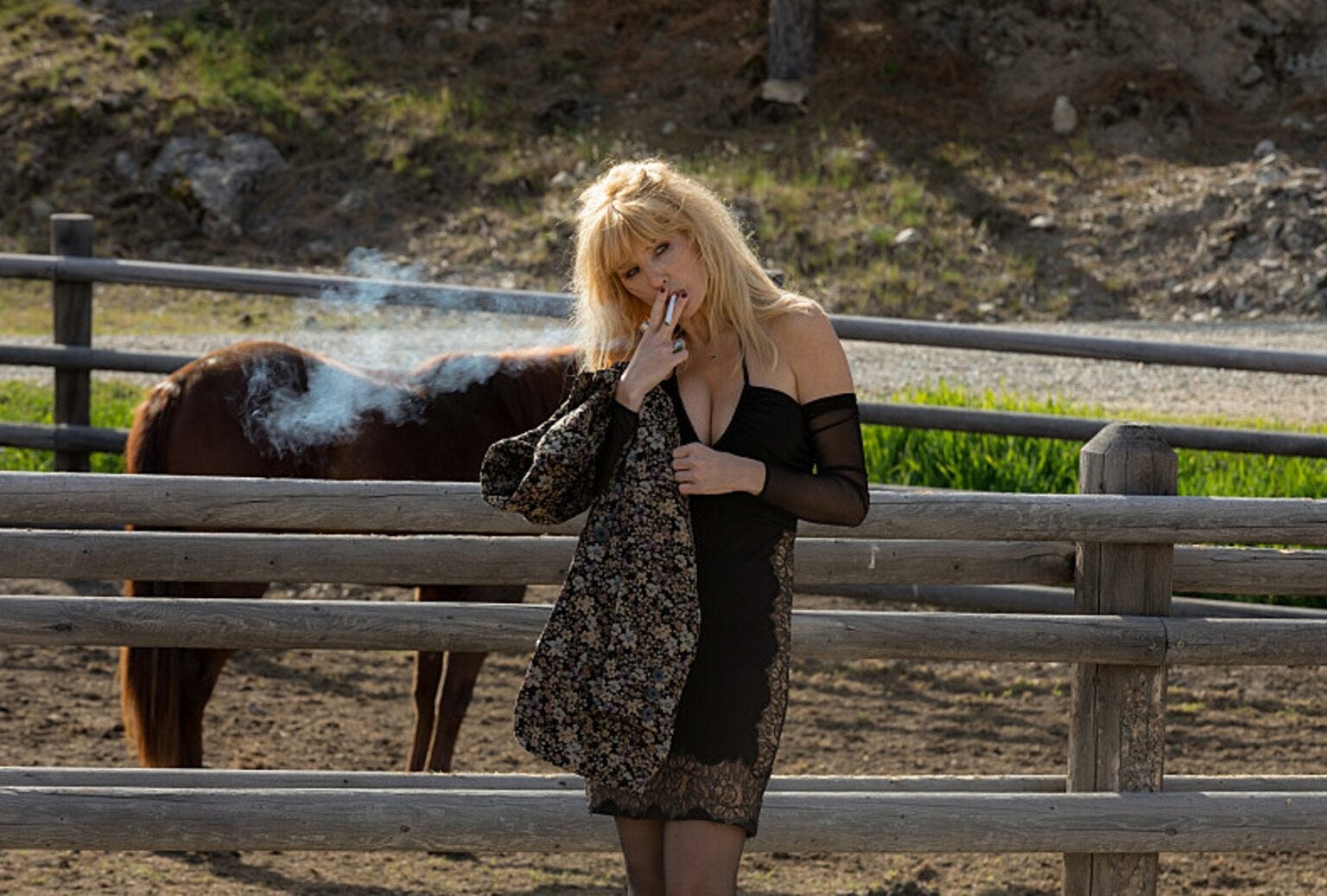
In Yellowstone, Beth Dutton storms into business meetings and utterly dominates everyone at the negotiating table, leaving seasoned executives unable to respond.
When people ask how any of this is possible, they’re asking the wrong question. If an ordinary person tried to behave this way, it would end badly - and very quickly. Sometimes Taylor Sheridan acknowledges that these actions are reckless and carry consequences. But more often than not, his protagonists are so extraordinary that they bend the realism of the setting around them. Their competence, determination, and sheer force of personality exceed what we would expect from an ordinary human being.
Take Casey Dutton. At one point, he leaves his child hidden in a ditch while pursuing kidnappers. Many viewers see that as reckless or even foolish - my wife certainly does. Within the logic of Sheridan’s world, however, it reads as courage. Casey is not meant to be an average father. He is meant to be a larger-than-life figure.
And this is what ties Taylor Sheridan’s style together. These larger-than-life characters navigate stories with immense dramatic density, yet they have room to breathe because those stories unfold in sparse, isolated settings. And because the premises themselves remain fundamentally realistic, these hyper-competent protagonists stand out even more. They become modern-day heroes - almost Hercules-like figures - capable of accomplishing what would seem impossible for ordinary people.
These larger-than-life characters are the final ingredient in Taylor Sheridan’s formula. But they only work because they are supported by the other three elements that make his storytelling so distinctive.
Conclusion
Taylor Sheridan’s storytelling follows what I would call GTA logic. It is based on real life, inspired by real life, but elevated above it - turned up to eleven out of ten.
He invites the audience into a story through familiarity and by relying on recognizable Western conventions. He then fills the plot with dramatic elements naturally associated with the premise, and finally populates that world with characters whose competence is so extraordinary that it bends reality the way a black hole bends gravity.
This approach undeniably works - but only if you’re willing to embrace that final ingredient: carefully measured exaggeration. Sheridan isn’t aiming for documentary realism. He’s creating a modern epic. His protagonists are closer to Siegfried or Beowulf than to ordinary people.
So what is the main takeaway?
You might think that Taylor Sheridan’s approach makes no sense for your story, and I get it. This type of reality-bending character is kind of an imposition. It seems to prohibit the plot from being logical and from the hard rules of the world acting upon the characters.
Right?
Wrong.
Breaking Bad and The Sopranos feel substantially more realistic than Taylor Sheridan’s shows. They are more procedural. They show the intricate mechanics of conflicts evolving in settings that are profoundly and decidedly realistic.
And yet, in The Sopranos, we have the psychic who tells Paulie Walnuts all about his crimes, prompting Paulie to burst out in a rather comical fashion. That supernatural event has no explanation in the show, but it clearly exists there for a reason - to suggest that there is a higher power watching over all these characters living in their own purgatory.
Then there is the Russian ex-Spetsnaz operative who disappears into the woods of New Jersey after supposedly escaping Paulie and Christopher - something a normal person simply isn’t supposed to do.
These sparse moments elevate the story. They highlight the realism precisely by introducing something supernatural or extraordinarily unlikely. And you cannot deny that they stand out. Those scenes are among the most memorable in the entire series.
Breaking Bad also relies on carefully chosen larger-than-life characters, albeit in a subtler way. We have Walter White, a high school chemistry teacher who develops such a unique method of manufacturing methamphetamine that entire drug cartels want to work with him and acquire his formula. We have Gus Fring, a drug kingpin who hides in plain sight while being almost cartoonishly meticulous and obsessive about every aspect of his operation. We have Mike Ehrmantraut, who displays a level of operational competence that borders on superhuman.
And yet, all of these characters, despite possessing larger-than-life qualities, remain confined by the rules of their world. Their talents and obsessions serve a dramatic purpose. They are exceptional, but they never feel disconnected from the setting.
So even if your story is completely realistic, and even if you have established hard rules for both your world and your characters, maybe - just maybe - it is worth taking another look.
See if there is a way to elevate your characters, not by breaking your world’s logic, but by making them just a little closer to a legend.
Tell me more in the comment section.
This was fantastic. I could happily read a whole series of these, but only whenever the mood strikes. You have a knack for unpacking stories.
I've watched "The Sopranos" once and "Breaking Bad" multiple times. I find "Better Call Saul" even better than "Breaking Bad."
If I only wanted to watch one Taylor Sheridan's movie or show, which one would you recommend?